
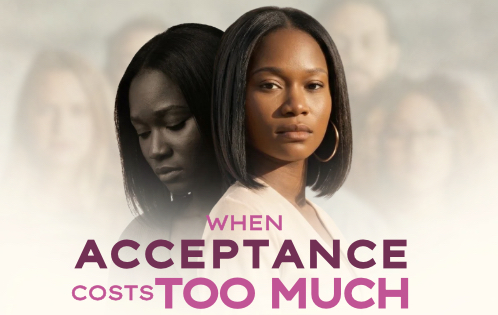
Acceptance is a powerful human desire.
Every woman wants spaces where she can belong: within family, friendship, marriage, church, community, and the larger world. But problems arise when belonging requires becoming less of the woman God created her to be.
Sometimes the cost of acceptance is subtle.
A woman learns not to mention the dream because other people think it’s unrealistic. She softens an opinion because confidence makes someone uncomfortable. She hides her gifts because standing out feels dangerous. She suppresses emotions because expressing them has earned unwanted labels. She accepts treatment that violates her boundaries because saying no might threaten the relationship.
Eventually, an important question must be asked:
What part of herself has she buried to be accepted?
That question came up while examining Tamar’s story in Second Samuel 13.
After Tamar was violated, rejected, and silenced, Scripture says she lived as “a desolate woman” in her brother Absalom’s house (2 Samuel 13:20). The robe she tore after the assault represented more than clothing. Something about her identity, dignity, safety, and expected future had been shattered.
Scripture offers few details about the rest of Tamar’s life. That absence is sobering.
Acceptance Should Not Require Self-Erasure
Sometimes a woman begins shrinking long before anyone explicitly asks her to. She simply learns which version of herself receives approval.
Quiet is acceptable, so she becomes quieter. Agreeable is rewarded, so disagreement disappears. Serving everyone else receives praise, so personal needs are neglected. A particular appearance earns acceptance, so she becomes preoccupied with meeting someone else’s standard.
Even spiritual environments can sometimes place expectations on women that God never placed there.
This begs a piercing question: “When did holiness become more about controlling women than transforming hearts?”
Biblical holiness is not an invitation to erase personality or personhood. Romans 12:2 describes transformation through the renewing of the mind. Galatians 5:22–23 describes the fruit produced by the Spirit. Neither passage describes holiness as becoming a smaller, less fully alive version of the person God created.
God’s transforming work brings a person into greater alignment with Him, not greater captivity to other people’s expectations.
Jesus Saw the Whole Woman
The Gospels repeatedly show Jesus encountering women whom society had reduced to a label.
The woman caught in adultery was publicly presented according to her sin, but Jesus refused to join the crowd’s condemnation (John 8:1–11).
The woman at the well carried a complicated relational history, but Jesus saw beyond that. He engaged her in one of Scripture’s most significant conversations about worship and revealed Himself to her as Messiah (John 4:7–26).
The woman with the issue of blood had spent years living with a condition that affected her health, finances, and place in the community. Yet when she reached for Jesus, He did not allow her to disappear anonymously into the crowd. He called her “Daughter” and told her to go in peace (Mark 5:25–34).
Jesus consistently restored dignity where culture supplied labels.
That matters because a woman can become so accustomed to seeing herself through other people’s reactions that she forgets to ask how God sees her.
Her Full Personhood Has Purpose
A woman’s value is not limited to how well she fulfills someone else’s expectations.
Her intelligence matters.
Her voice matters.
Her gifts matter.
Her emotional health matters.
Her calling matters.
Her boundaries matter.
Her purpose matters.
Galatians 3:26 says, “For ye are all the children of God by faith in Christ Jesus.” Identity begins there—not in labels, roles, failures, relationships, appearance, or other people’s approval.
And Ephesians 2:10 says believers are God’s workmanship, created in Christ Jesus for good works that God prepared beforehand. There is purpose attached to the person God created.
The goal, then, is not to become whatever version earns the most applause. The goal is to allow the grace of God to heal, mature, and reveal the woman He created.
It May Be Time to Unbury Something
Perhaps a gift has been hidden. Perhaps a boundary has been abandoned. Perhaps a dream was dismissed years ago. Perhaps a voice became quieter.
Perhaps joy, creativity, leadership, tenderness, ambition, or curiosity was buried because being fully alive made somebody else uncomfortable.
Grace invites those hidden places into the light. Healing doesn’t require becoming someone else. Healing means finally allowing the woman God created to emerge without believing she must apologize for existing fully.
As Psalm 139:14 declares, every person is “fearfully and wonderfully made.” Acceptance purchased through self-erasure costs too much.
God never asked His daughters to disappear in order to belong.
Reflection Questions
- What parts of personality, gifting, desire, or calling have been minimized in order to gain acceptance?
- Are there relationships or environments where belonging seems to require becoming smaller?
- Which labels from other people have been allowed to speak louder than what God says?
- What buried part of the woman God created may be ready to come back into the light?